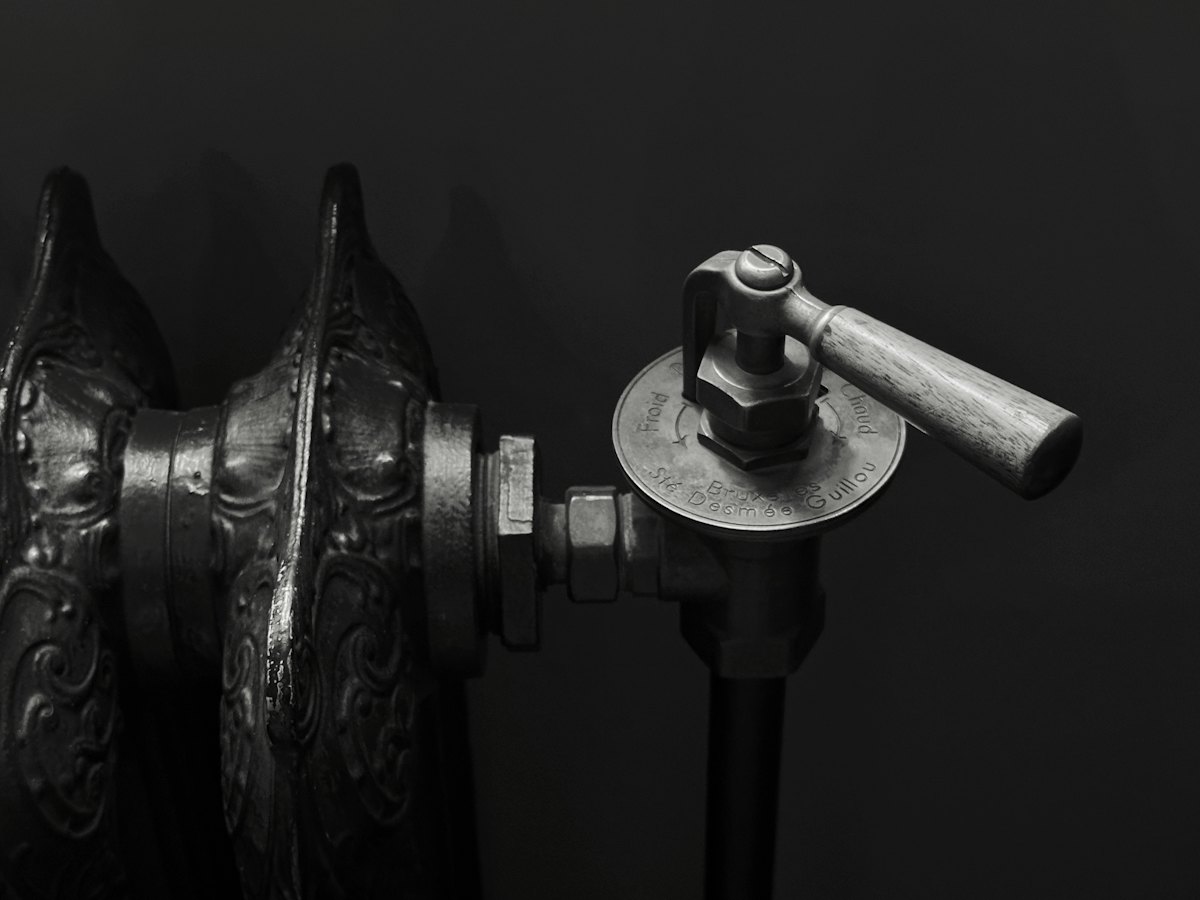
Cast-iron radiators last a century, but the valves, vents and piping around them don't. The most common complaints we hear: one room is always cold, the upstairs radiators are lukewarm, or the pipes knock when the heat comes on.
A radiator service visit starts with bleeding trapped air from every radiator, checking system pressure, and balancing the flow so the far rooms get their share. We replace stuck valves, leaking vents and worn packing nuts.
We also move and reconnect radiators for remodels and flooring, and can add thermostatic valves so each room can be set to its own temperature.
Signs you need this
- One or two radiators are cold at the top while others are hot
- Radiator valves won't turn, or leak around the stem
- Knocking or banging when the heat starts
- You're refinishing floors and need radiators moved
How it works
Walk the house
Check each radiator's temperature and valve, with you along to point out problem rooms.
Bleed and balance
Air out, pressure checked, flow adjusted so every room heats evenly.
Repair
Replace valves, vents and packing as needed, with prices given first.
Common questions
Should I paint my radiators?
You can, but metallic paints reduce heat output. A flat or satin paint is better. Keep the paint off the valves.
Can radiators be removed and reinstalled?
Yes. We drain the system, disconnect, move them and reconnect. Cast-iron radiators are heavy; allow a half day with two techs.
Why is only the top of my radiator cold?
Trapped air. Bleeding the radiator usually fixes it. If it keeps happening, the system may be losing pressure.